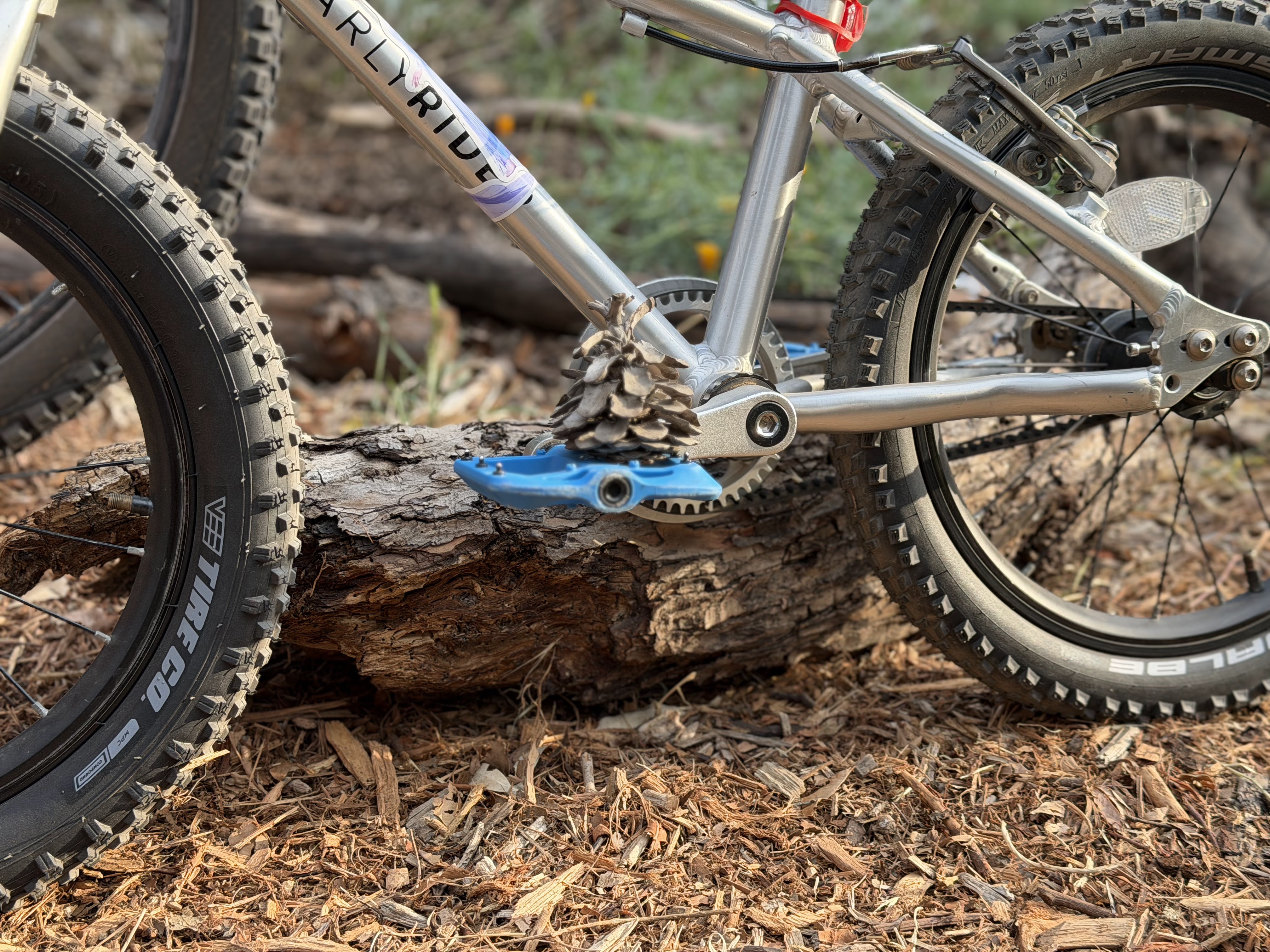
Why We Started Camping & Mountain Biking With Toddlers
If you had told me a few years ago that our weekends would revolve around packing tiny sleeping bags, strapping miniature bikes to the car, and convincing a toddler that pinecones are not snacks, I would have laughed. The idea of camping and mountain biking with little kids honestly sounded… stressful. I pictured sleepless nights, epic meltdowns, and us carrying bikes more than our kids rode them.
But somewhere between feeling stuck at home with young kids and missing the trail time we used to love, we started asking a different question: instead of waiting for “someday” when the kids are older, what if we just tried now—on their terms?
Feeling Nervous (And Doing It Anyway)
I want to be honest: I did not feel brave when we started. I felt nervous. What if no one slept? What if someone fell and we were miles from the car? What if we hauled all the gear to a campsite and lasted exactly one night?
Those worries were real, and we took them seriously. But there was another feeling underneath them: a tug to get back outside, to share the places we loved with the tiny humans we loved even more. That tug is what finally won.
Why We Chose To Start Anyway
When we really sat down and thought about it, there were three big reasons we decided to start camping and mountain biking with toddlers, even though it felt a little scary.
1. We Wanted Unhurried Time Together
At home, it felt like we were constantly juggling chores, screens, and schedules. Even on weekends, we were busy. Out in the woods, there’s not much to do except be together. Collecting sticks, poking at bugs, making “soup” out of leaves at the campsite—these slow, silly moments have become some of our favorite family memories.
On the bikes, we ride at toddler speed, which is a whole new gear. We stop for every interesting rock. We cheer for every tiny hill. The rides are short, but the connection feels big.
2. We Love Nature (And Want Our Kids To Love It, Too)
Before kids, time outside was how we reset. Being in the trees or on a trail helped us breathe a little deeper and think a little clearer. When our kids arrived, we didn’t want nature to become something separate from family life—something we “used to do.” We wanted them to grow up thinking that sleeping under the stars and riding through the woods is just… normal.
We don’t lecture our kids about why nature matters. Instead, we let them feel it: the crunch of gravel under bike tires, the sound of wind in the pines, the thrill of spotting a deer on an early morning ride to the campground bathroom.
3. We Want Confident, Capable Kids
There is something powerful about seeing your child do something they didn’t think they could do—whether it’s climbing into a sleeping bag in a dark tent or riding over a tiny root they once avoided. Camping and biking give our kids so many chances to practice bravery in a low-stakes way.
They learn that it’s okay to feel unsure and keep going anyway. They learn that falling isn’t the end of the story, it’s part of it. And we get to be right there, cheering them on, not just at soccer games or school events, but on dirt, under trees, in the middle of real life.
Our First Trip With a Toddler (Spoiler: It Was Messy and Wonderful)
Our first camping trip with a toddler was only one night, at a campground 30 minutes from home. We picked it because we knew we could bail if it was a disaster. We packed way too much stuff (including an entire grocery bag of snacks) and rolled in late because, of course, someone needed one more potty break on the way.
Setting up the tent took twice as long as usual because our toddler insisted on “helping” with every pole. By the time we finished, there were goldfish crackers in our sleeping bags, a favorite stuffed animal already muddy, and a stick collection blocking the tent door.
That evening, we took a short spin on the campground loop with the balance bike. Our toddler rode about 50% of it and we carried the bike the other 50%, but the grin on that tiny face when we yelled, “You did it!” made every awkward moment worth it.
Did anyone sleep through the night? Absolutely not. There were midnight questions about shadows on the tent wall, an early-morning chorus of birds that woke everyone up at 5 a.m., and a very strong cup of camp coffee for the adults. But as we drove home, tired and a little sticky, we looked at each other and said, “We’re doing that again.”
What Surprised Us Most
Kids Are More Capable Than We Think
I went into that first trip treating our toddler like they were made of glass. But the more time we spent outside, the more I realized how capable they are. They can walk farther than I expected, ride longer than I thought, and adapt to new routines with a little patience and reassurance.
Of course, we keep things age-appropriate and safe, but giving them small challenges—like walking the last part of the trail on their own or riding a slightly bumpy section—has shown us just how strong and resilient they can be.
A Slower Pace Can Actually Be Better
Before kids, we measured rides in miles and elevation. With toddlers, we measure them in puddles splashed, rocks collected, and snack breaks. Our pace is slower, but in that slower pace we’ve noticed so much more.
We stop to watch ants cross the trail. We point out different bird calls. We sit on logs just because someone wanted to see how bouncy they are. It turns out that when you’re not in a hurry to “finish” a ride or “conquer” a trail, you experience the whole thing differently—and often more deeply.
How We Keep Things Safe and Fun
We’re not fearless, and we’re definitely not reckless. We’ve learned a few simple habits that keep our camping and biking adventures safe, fun, and (mostly) meltdown-minimal.
We Choose Easy Trails and Simple Campsites
For biking, we look for wide, smooth trails with minimal climbing—think green-rated trails, bike paths, or quiet gravel roads. We aim for short, success-focused rides where our kids can finish feeling proud, not exhausted.
For camping, we started with drive-in sites that had bathrooms nearby and a short walk from the car. We’ll save the backcountry dreams for later. For now, it’s about making it as easy as possible to get out there.
We Set Realistic Expectations
We go into every trip assuming:
- Someone will cry (maybe even an adult).
- Plans will change.
- The ride will be shorter than we imagined.
- Bedtime will be later than at home.
When those things happen, we don’t treat them as failures—they’re just part of the package. Our goal is not a perfect Instagram trip; it’s a real, shared experience.
We Always Have Backup Plans (And Snacks)
We never head out without a backup plan. If the loop trail is too long, we turn around early. If the bike ride isn’t working, we turn it into a “bike and hike” where the kids push their bikes and look for cool sticks. If camping goes sideways, we know how to pack up quickly and head home.
Snacks are our secret superpower. We keep easy, familiar snacks on hand and take lots of breaks. A toddler who is cold, tired, and hungry is going to hate everything. A toddler who is slightly tired but holding a granola bar can conquer the world.
Thinking About Trying It? Start Small.
If you’re a parent wondering whether camping or mountain biking with little kids is worth the effort, here’s what I’d say: you don’t have to do a big, epic trip to begin. Start tiny.
- Ride laps around a quiet parking lot or park path.
- Have a “practice campout” in your backyard or living room.
- Do a one-night stay at a nearby campground so you can bail if you need to.
- Invite another family with kids to join—everything feels easier when you’re in it together.
You’re allowed to be nervous and excited at the same time. You’re allowed to pack too much, forget things, and learn as you go. We certainly did—and still do.
But if you feel that little tug to get outside with your kids, to trade one weekend of errands for a night under the stars and a wobbly ride on a forest trail, I hope you’ll listen to it. Start small, go slow, keep it fun, and you might just discover that these imperfect, muddy, snack-filled adventures become some of your family’s favorite stories.


Leave a comment